Agricultural advisors /Extension officers play a transformative role in supporting farmers from the soil-testing stage all the way to marketing their produce or livestock. They provide technical guidance, practical demonstrations, and tailored solutions for both new and experienced farmers.
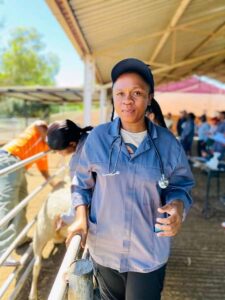
As an Assistant Agricultural Practitioner working alongside a Senior Agricultural Advisor, I experienced firsthand how this support changes farming outcomes on the ground.
SOIL ASSESSMENT AND LAND PREPARATION
During one of our visits, we assisted a farmer who wanted to rent land for crop production. We began by collecting soil samples to determine nutrient status, pH, and suitability for planting. Afterward, we assessed the land size using a distance-measuring wheel, the tool used to calculate kilometers and hectares. This ensured the farmer understood exactly how much land was available and how to plan production accordingly.
Solution:
- Conduct soil testing before planting.
- Use proper land measurement tools to plan input needs.
- Develop a cropping plan based on soil results.
SUPPORTING POULTRY BEGINNERS
Another visit involved a farmer who had recently purchased chicks. While the housing was well-built, he lacked knowledge on brooding temperature, lighting requirements, and vaccination schedules. Without this guidance, the chicks were at risk of high mortality.
Solution:
- Keep chicks warm: start at ±32°C and reduce gradually weekly.
- Provide 24-hour lighting during the first week.
- Follow a structured vaccination program for common poultry diseases.
- Monitor chick behavior for signs of cold or overheating.
GUIDING NEW LIVESTOCK FARMERS
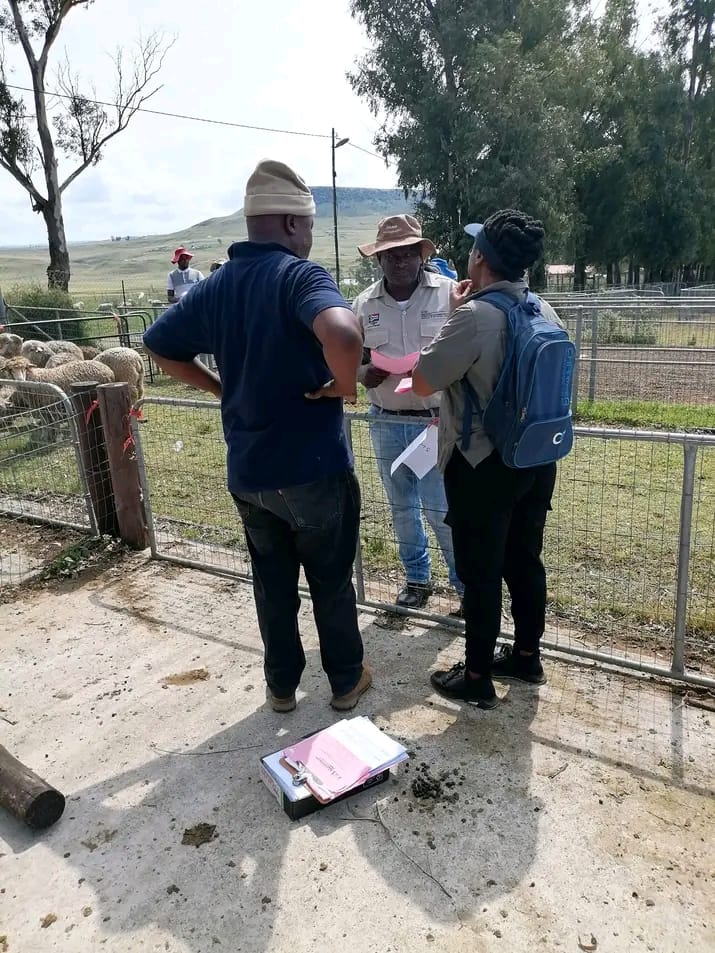
At our office, we met a farmer who wanted to start livestock farming but didn’t know how many animals to buy or which species to start with. We explained that the first step is understanding the market, followed by aligning animal numbers with available grazing and carrying capacity. We also guided him on what to check before purchasing animals, such as body condition, age, health, and breed suitability.
Solution:
- Research the market before buying livestock.
- Match livestock numbers to grazing capacity.
- Inspect animals thoroughly before purchasing.
- Start small and scale responsibly.
ACCESS TO AGRICULTURAL ADVISORS
Each area in South Africa has an allocated Agricultural Advisor responsible for assisting farmers. Anyone needing help can visit their nearest Department of Agriculture under the Extension and Advisory Services unit. Whether the question is about crops, livestock, poultry, soil, or marketing, advisors are available to guide farmers.
However, South Africa currently has a shortage of Extension Officers, meaning the few available must support many farmers across wide areas.
A CALL FOR GOVERNMENT SUPPORT: EMPLOY MORE AGRICULTURE GRADUATES
The agricultural sector continues to grow, but the number of Extension Officers has not increased at the same pace. Many agriculture graduates remain unemployed despite having the skills needed to support farmers.
We encourage the government to employ more agriculture graduates to strengthen extension services. Doing so will:
- Reduce the shortage of Extension Officers.
- Problem-solvers
- Market facilitators
- Field technicians
- Mentors for new and emerging farmers
They walk with farmers from soil to market, ensuring sustainable production and long-term growth.
CONCLUSION
The real impact of agricultural advisors lies in their ability to support farmers with practical solutions, technical knowledge, and market guidance. Whether assisting with land measurement, poultry management, livestock planning, or diagnosing crop challenges, advisors ensure farmers are never alone in their journey. Their role is essential for building a resilient and productive agricultural sector in South Africa. Despite being few in number, they continue to make a powerful difference, one farm at a time. Strengthening this workforce by employing more agriculture graduates will further support the nation’s agricultural future.