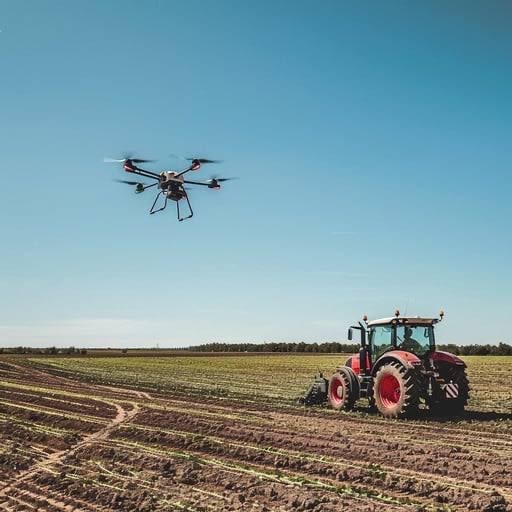
As agriculture evolves, a common misconception keeps resurfacing: that drones and traditional machinery are somehow competing for the same role on the farm. After speaking with farmers across South Africa, working closely with dealers, and observing real operations in the field, one thing is clear:
Drones and tractors are not rivals.
They are partners.
Each plays a different role, and when used together, they create a more efficient, cost‑effective, and sustainable farming system.
This article explores why the future of farming depends on the synergy between drones and tractors, not on choosing one over the other.
1. They Solve Different Problems
Tractors = Power
Tractors handle physical work:
- Tillage
- Planting
- Heavy spraying
- Hauling
- Pulling implements
- Mechanical tasks
These are jobs that require strength, traction, and durability.
Drones = Precision
Drones handle the intelligence side:
- Scouting
- Mapping
- Data collection
- Identifying stress areas
- Targeted spraying
- Rapid response to localized issues
These are tasks that require speed, accuracy, and minimal wastage.
When you combine power with precision, you get smarter farming.
2. Drones Reduce Unnecessary Tractor Passes
Every unnecessary tractor pass costs money:
- Fuel
- Labour
- Time
- Wear and tear
- Soil compaction
Drones step in before the tractor moves, helping farmers answer:
“Do I really need to drive out there today?”
By scouting problem areas early, weeds, pests, diseases, nutrient issues, drones help farmers plan tractor use more strategically.
This means:
- Fewer wasted trips
- Less fuel consumption
- Less soil disturbance
- Longer machine lifespan
3. Tractors Handle the Heavy Work, Drones Handle the Urgent Work
There are two types of tasks on a farm:
1. Heavy, scheduled operations
Examples:
- Planting
- Fertiliser spreading
- Broad-acre spraying
These are tractor jobs.
2. Rapid, targeted interventions
Examples:
- Sudden pest outbreak
- Localised disease pressure
- High-value block stress
- Wet conditions where tractors can’t enter
These are drone jobs.
Together, they cover both the planned AND the unexpected.
4. Drones Enable Better Timing – One of the Biggest Yield Factors
Agriculture is all about timing.
Being late by even 24–48 hours can mean:
- Lost yield
- Pest resistance
- Fungal spread
- Lower crop quality
Tractors can’t always access fields immediately:
- Heavy rains
- Muddy fields
- Labour availability
- Mechanical delays
Drones eliminate these barriers.
They can fly immediately, without delay, and without damaging crops.
This partnership ensures:
The tractor works when conditions allow
The drone works when time is critical
5. Together, They Reduce Input Costs Significantly
Tractors excel at applying bulk inputs across large fields.
Drones excel at applying inputs only where needed.
That precision means:
- Fewer chemicals wasted
- Lower costs
- Reduced environmental impact
- Better return on investment
Farmers who use both tools consistently say the same thing:
“I’m saving money without sacrificing performance.”
6. Drones Give Farmers Information – Tractors Turn That Information Into Action
This is where the magic happens.
Drones provide:
- Maps
- Insights
- Monitoring
- Stress identification
- Issue localization
They tell you:
- Where the problem is
- How big it is
- How severe it is
Tractors execute:
- Planting
- Spreading
- Spraying
- Fixing
- Application
This turns information into targeted, effective action.
7. It’s Not “Old vs New” – It’s a Modern System
There’s no battle between tractors and drones.
Instead, think of it like this:
Tractors are the muscle
Drones are the eyes and brain
Farmers are the decision-makers
Modern agriculture isn’t about replacing tools, it’s about integrating them into one efficient system.
Final Thought
The future of farming doesn’t belong to drones or tractors.
It belongs to farmers who understand how both work together.
Drones provide speed, precision, and insight.
Tractors provide force, durability, and execution.
Combined, they create a smarter, more profitable, and more sustainable farming system.
This isn’t the story of replacement.
It’s the story of collaboration – and South African agriculture is right at the beginning of this exciting transformation.