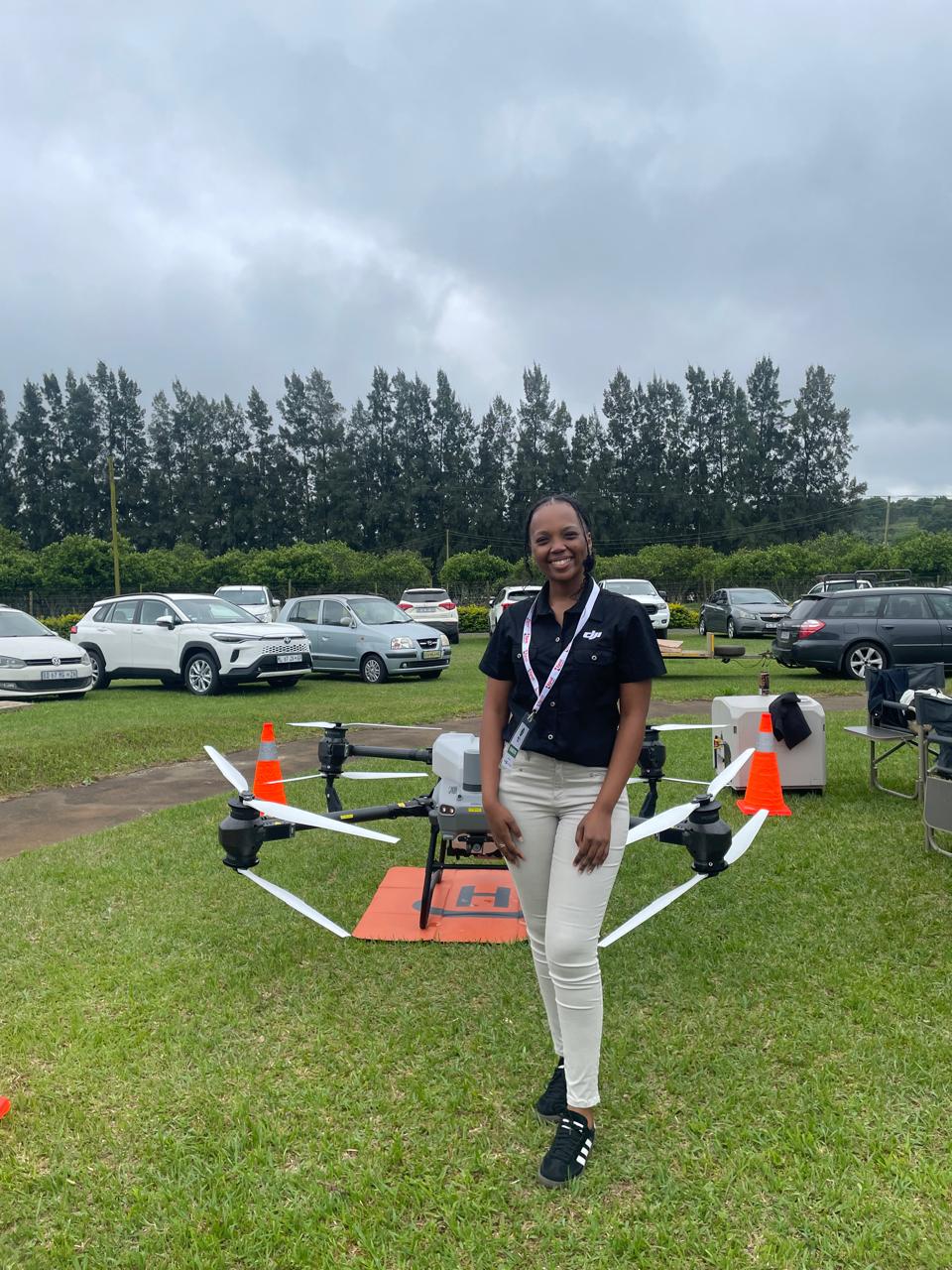
Over the past few years, agricultural drones have taken South Africa by storm , transforming how farmers manage crops, apply inputs, and gather field data.
What many people don’t realise is that behind every drone taking off, there is a trained, licensed pilot navigating the skies with precision and safety.
I never imagined I would become one of them.
Today, I work as a DJI Agriculture Intern, and I am a qualified drone pilot. But my journey started with uncertainty, fear, and a willingness to follow curiosity more than confidence.
This is my story and a message to every agriculture student, young graduate, or woman who feels intimidated by technology: your career can take flight in ways you never expected.
How It Started: I Took a Leap of Faith
I applied for a learnership/internship that covered the full cost of drone pilot training. At the time, I didn’t know much about drones. I only knew that:
- drones were becoming big in agriculture,
- technology was shaping the future of farming, and
- I didn’t want to miss out on the opportunity to grow.
I was nervous , really nervous.
But I applied anyway.
That one decision opened the door to a completely new world.
The Theory Phase: “Why Do I Need to Learn All This Just to Fly a Drone?”
Before touching a drone, you must complete the theoretical training. And let me tell you: theory is packed with aviation knowledge.
You learn about:
- aviation regulations
- airspace rules
- weather and meteorology
- safety protocols
- flight operations
- and even radio communication
There were moments where I asked myself,
“Why do I need to know all of this for a drone?”
But it becomes clear very quickly that we share the airspace with manned aircraft, and safety is non-negotiable.
I’m proud to say I passed my theory exam on the first attempt, but yes you can rewrite if needed. There’s also the radio exam, which teaches you how to communicate professionally with other pilots.
It feels overwhelming at first, but it’s worth it.
Practical Flying: The Fun Part
Once you move to practical training, everything starts coming together.
Flying becomes easier with practice especially once you master the basic manoeuvres. But with repetition, things become smoother.
Your confidence grows the more you fly.
The key is simple: keep practising.
The Final Test: Skills, Confidence, and Radio Communication
When it’s time for your final skills test, the examiner checks:
- your ability to fly safely
- how you communicate on the radio
- your understanding of aviation rules
- your ability to navigate the SACAA website
- your confidence and judgement in the air
It’s nerve-racking, but it’s also incredibly rewarding.
Because once you pass you are officially a drone pilot.
Let’s Be Honest: Drone Licensing Is Expensive
Here’s something that isn’t talked about enough: getting a drone license in South Africa can be costly.
The training, the exams, the medicals, the renewals it all adds up.That’s why I always encourage young people to look out for learnerships and internships that cover the cost. There are opportunities out there, especially in agriculture and tech companies, and they can change your life the way they changed mine.
If you’re passionate about agri-tech but worried about finances, apply for these programmes. Your future self will thank you.
What I See in the Industry Today
Working at a place where drones are distributed has opened my eyes to the massive demand in South Africa’s agriculture sector.
Every week, I see:
- more farmers investing in drones
- more resellers wanting to enter the drone market
- more students interested in agri-tech
- more conversations about precision farming and sustainability
The drone industry is not slowing down.
It is growing, evolving, and creating new career paths especially for young people.
A Message to Agriculture Students: Don’t Be Afraid to Change Direction
One of the biggest lessons I’ve learned is this: your agriculture degree does not lock you into one path.
Agriculture is broad. It is flexible. It is full of opportunities that you only discover once you step out of your comfort zone.
You might start in animal science and end up in aviation.
You might study crops and end up in tech.
You might love farming but find your passion in data, drones, or climate solutions.
Your career is allowed to change just like mine did.
If you’re curious, explore.
If you’re scared, try anyway.
If a new opportunity knocks, open the door.
And to every young woman reading this:
Do not be intimidated by technology.
You belong here. You are capable. You are needed in shaping the future of agriculture.
Final Thoughts: Your Journey Is Yours to Write
Becoming a part of the drone industry has been one of the most unexpected and empowering experiences of my life. It taught me confidence, discipline, and the importance of staying open to new opportunities.
Agriculture is changing.
Technology is rising.
And young people have an important place in this growth.
If my story inspires even one student to take a chance on themselves, then sharing it is worth it.
Your journey might not look like you planned.
Mine didn’t.
But sometimes, the best things happen when you follow curiosity instead of certainty.
Here’s to new beginnings and new possibilities.