What if the problem you’re trying to fix is only happening in one part of your field, but you still spray the entire block?
For decades, broad‑acre spraying has been the standard in agriculture. When a problem appeared in one part of a field, the typical response was simple: spray the entire block. It was the safest option, the most familiar method, and often the only practical solution available.
But as technology evolves, especially with the rise of agricultural drones, the conversation is shifting from blanket spraying to precision intervention. And the more farmers begin adopting drones, the clearer the shift becomes:
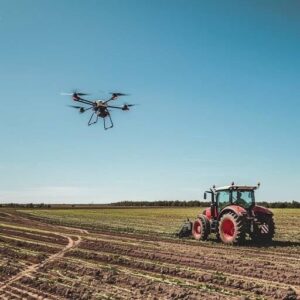
Tractors still spray.
Drones now help decide where and when they should spray.
This doesn’t replace tractors.
It transforms how tractors are used.
Here’s how.
1. Targeted Spraying: Treating Only What Needs Attention
Blanket spraying is built on assumption:
“If one part of the field has a problem, it’s safer to treat everything.”
Drones challenge that assumption by revealing the actual condition of the field.
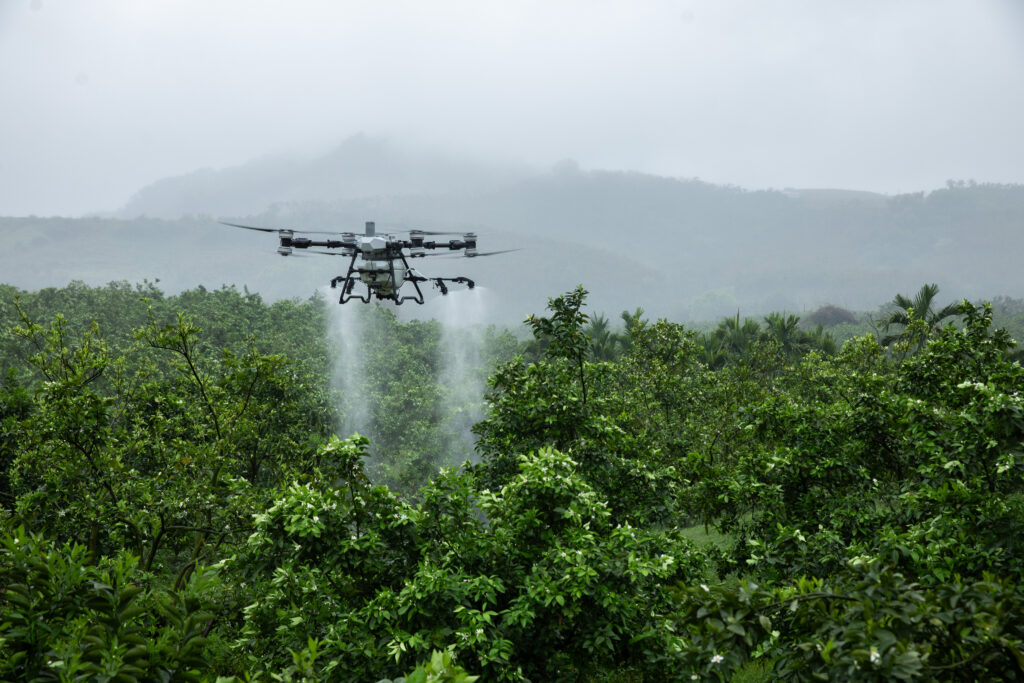
A drone can:
- Map stress areas
- Detect pests early
- Identify nutrient deficiencies
- Pinpoint disease outbreaks
- Capture variations in canopy health
With that information, farmers finally know:
- Where the issue is
- How big it is
- What’s causing it
- How urgently it needs attention
Instead of covering 100 hectares, you may only need to treat 12.
This is not about replacing spraying equipment.
It’s about informing it.
2. Chemical Reduction Without Compromising Protection
Farmers are under pressure to:
- Lower input costs
- Reduce chemical usage
- Improve environmental stewardship
- Maintain yield integrity
Precision spraying through drones helps achieve all four.
When drones identify the exact zones that need treatment, tractors ,or drones themselves ,can apply chemicals only where they matter most.
This leads to:
- Less wastage
- Lower diesel and chemical spend
- Healthier soil and water systems
- Reduced pressure on beneficial insects
- Fewer unnecessary passes
In other words:
Precision isn’t just good for the environment.
It’s good for the budget.
3. Timing: Speed Matters More Than People Realize
In modern farming, timing is everything.
A small window exists for effective spraying. Missing that window can mean:
- Wider pest outbreaks
- Faster fungal spread
- Weaker plant resilience
- Lower crop quality
- Reduced yield
This is where drones shine.
Drones:
- Fly when fields are too wet for tractors
- Respond immediately to scouting data
- Reach areas quickly without compaction
- Apply treatments before a problem escalates
This precision timing ensures the tractor works when it makes sense, and the drone works when speed matters most.
Together, they protect yield in ways blanket spraying never could.
4. Tractors Still Have Their Place — and Always Will
Tractors remain essential for:
- Large-volume applications
- Fertilizer spreading
- Broad-acre coverage
- Implement pulling
- High-rate spraying
These are jobs drones are not designed to replace.
But what drones do is ensure these tractor operations happen:
- At the right moment
- In the right zones
- With the right dosage
- With fewer unnecessary passes
Instead of being the first response tool, tractors become part of a larger, smarter system.
5. Precision Decisions: The New Currency of Modern Farming
Agriculture is moving away from “more inputs = better results.”
The new model is:
Right input, right place, right time, right amount.
And drones sit at the centre of that decision-making process.
They give farmers:
- Real-time insights
- Visual confirmation
- Data-backed recommendations
- Clear action maps
Those insights guide:
- Tractors
- Implements
- Sprayers
- Labour planning
- Chemical purchases
This is the real transformation: Not drone spraying.
Drone-informed spraying.
6. The Environmental Win Farmers Don’t Talk About Enough
Farmers often hesitate to use the term “environmental sustainability” because it can sound political or overly academic.
But at its core, sustainability simply means:
- Less waste
- Fewer inputs
- Smarter timing
- Better soil health
- More resilience against climate variability
Drones quietly support all of this, without forcing farmers to change their entire operation or take on unnecessary risk.
Final Thought: Farming Is Becoming More Precise, Not More Complicated
The shift from blanket spraying to precision decisions isn’t about replacing tractors or abandoning traditional methods.
It’s about giving farmers better tools to protect their fields, budgets, and long-term productivity.
Tractors still do the heavy lifting.
Drones do the fast thinking.
Together, they form a smarter, more efficient, more sustainable system.
This is the future of farming – not replacement, but refinement.