
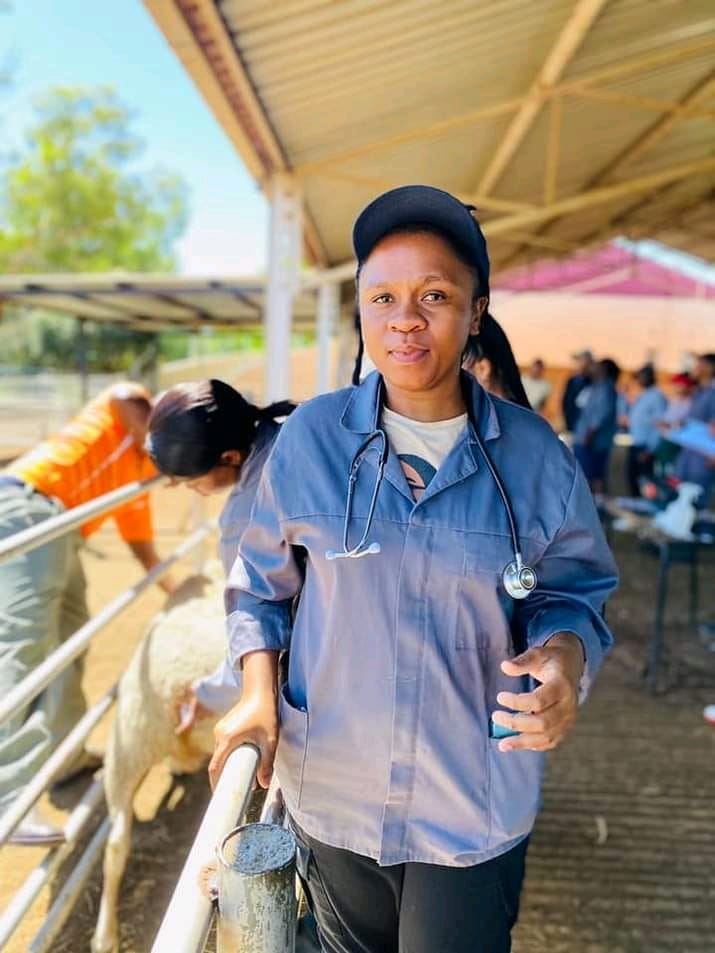
During my postgraduate studies, I had the opportunity to apply the Famacha system on the university farm. The Famacha system is a simple but effective method used to detect anemia in sheep and goats, often caused by the barbe’s pole worm. By using this system, we were targeting only the animals that need treatment, reducing unnecessary medication and promoting sustainable parasite control
Worms are one of the biggest health challenges in sheep and goats, especially the barber’s pole worm, which feeds on the animal’s blood. When animals lose blood, they become weak, stop gaining weight and may even die suddenly.
Because early worm infections are hard to see from the outside, farmers need a method that helps them detect health problems early. The FAMACHA system is a simple, reliable way to check if an animal has anaemia caused by internal parasites.
What is the FAMACHA System?
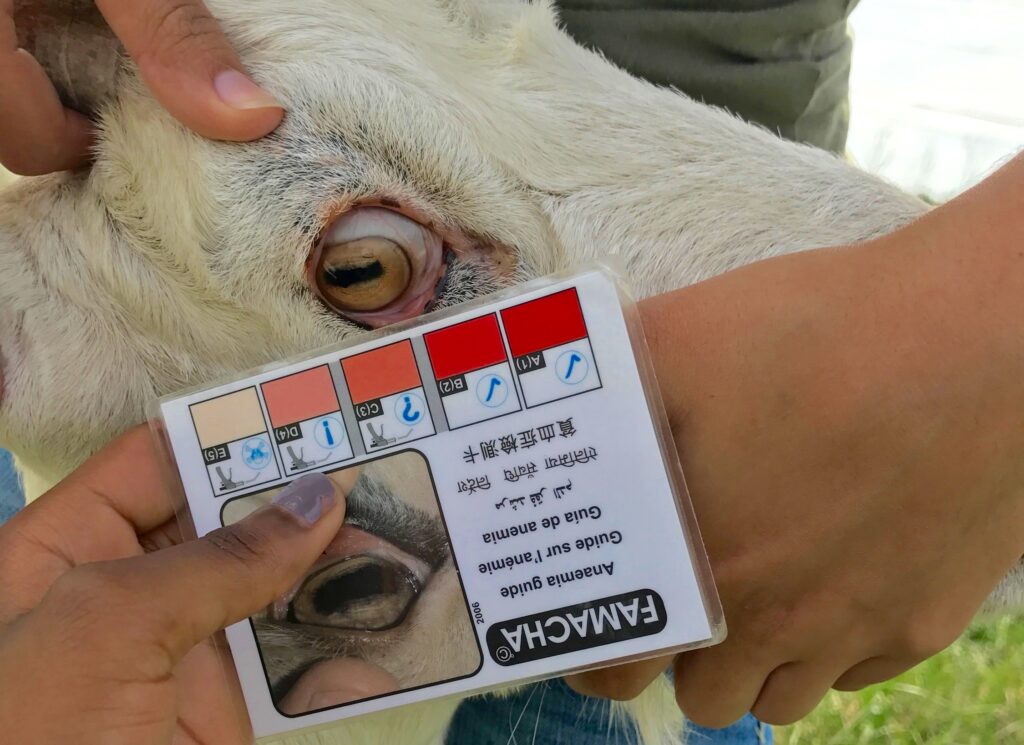
FAMACHA uses a colour chart to compare the inside of the lower eyelid. Healthy animals have bright red eyelids. Pale eyelids mean worms are causing blood loss. The chart ranges from 1 to 5, where 1 is healthy and 5 is a emergency
Observing Animal behavior before assessment
Before examining any animals, we were taught to observe their behavior carefully. Watching how sheep and goats move, feed, and interact gives early clues about their health. Animals that are isolated, or showing discomfort may have underlaying health problems. I realized that observation is the first and most important step in livestock health management, even before touching the animals.
Applying the FAMACHA scoring Method
The next step involved examining the lower eyelid of each animal using the FAMACHA chart which ranges from 1(healthy, red eyelids) to 5(Pale, severely anemic). Matching the eyelid color to the chart allowed us to identify animals that needed treatment. I learned that accurate scoring and careful observation are key to effective parasite management, rather than just giving dewormers indiscriminately.
Using body condition scoring (BCS) and Rumen sound assessment
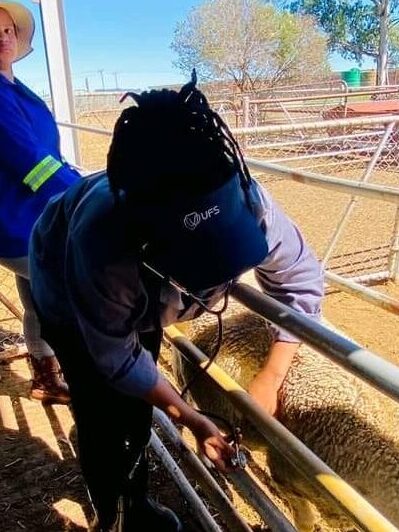
I also performed body condition scoring (BCS) to assess fat and muscle reserves, scoring animals from 1 (thin) to 5 (overweight). I did not rely on looks- wool or hair can hide fat or thinness, stand the animal calmly, and placed my hand on the loin area just behind the last rib and before the hip bone. Then I used my fingers and thumb to feel for muscle and fat over the backbone place This helped link nutrition and overall health with parasite load. Additionally, we listened to the rumen sounds using a stethoscope. Hearing the rhythmic gurgling of healthy rumen, no sound means the animal may be sick, this showed me how important digestion is for animal well-being. Combining behavior observation, FAMACHA scoring, BCS and rumen assessment gave a complete picture of each animal’s heath.
My Experience Using FAMACHA
I used FAMACHA during my studies and also later as an Assistant Agricultural Practitioner. I helped a farmer select healthy sheep for an agricultural show using this method. We chose the animals that were healthy inside, not only good-looking. And the farmer won because we chose the best animal using this system.
Reflection on what I learned from this Famacha system
Reflecting on this experience, I realized that caring for animals goes beyond treatment. It requires observation, patience, and understanding of their needs. Applying these practical skills gave me confidence to approach livestock management scientifically while keeping animal welfare a priority. This hands-on learning reminded me that good animal care starts with watching, understanding, and caring for animals.
Key takeaway: why should every farmer learn FAMACHA
For everyone new or old to sheep and goat health management, learning the FAMACHA system is invaluable. It is not just a technical skill but a lesson in responsibility, observation, and compassion. By combining Famacha scoring with body condition score(BCS), rumen assessment, and behavioral observation, farmers and students alike can manage livestock health sustainably and effectively.
This system is free, easy and saves animals. It also prevents unnecessary medicine use, which saves money and keeps dewormers working longer. Farmers should use it every 2–3 weeks, especially in warm and rainy seasons.
Conclusion
The FAMACHA system helps farmers protect their animals early. Anyone can learn it. Healthy animals mean a healthy farm. Start checking your sheep and goats to keep them strong and productive.
Sound impressive and interesting for both smallholder farmers and commercial farms keep writing
Can you do it for me in my farm
I am a crop farmer who wants to venture into animal farming and reading this was so refreshing. I learned something important today. Please continue sharing such pieces 🙏
Well written and very important information for farmers to increase their productivity and profit.It will reduce health risks amongst their livestock farmers will be able to isolate sick animals on time to be treated.
Well written, informative, how can we prevent worm infestation in animals?