When we think about agriculture, the image that often comes to mind is a farmer standing in a field, watching over a crop or checking livestock. For generations, that farmer has often been imagined as a man.
But women have always been part of agriculture.
Long before women were recognised as agricultural entrepreneurs, farm managers, researchers, agronomists and leaders, women were planting, harvesting, raising livestock, processing food and helping sustain their families and communities.
The story of women in agriculture is therefore not a story about women entering agriculture for the first time. It is a story about women becoming increasingly visible in spaces where their contributions have not always received the recognition they deserved.
And today, that story is changing.
Women have always been part of agriculture
Women’s contribution to agriculture stretches far beyond the image of someone working in a field.
Across rural communities, women have played important roles in food production, household food security and agricultural labour. They have worked on farms of all sizes, from small-scale operations supplying local communities to commercial farms producing commodities for larger markets. In South Africa, women are also represented across the broader agricultural value chain, including farming, processing, research, extension services, business and entrepreneurship.
Yet participation has not always meant equal access.
Women have historically faced barriers when it comes to land ownership, finance, training, technology, markets and decision-making. In South Africa, women remain less likely than men to own agricultural land, while women employed in agriculture are also less likely to be working in commercial farming.
This makes the progress we see today even more significant.
The changing face of agriculture
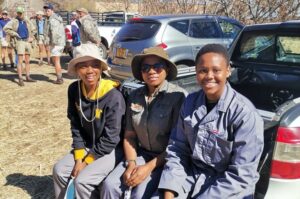
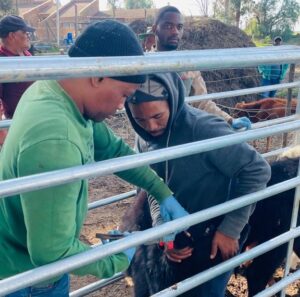
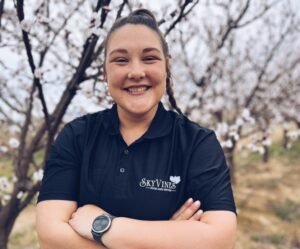
Walk into an agricultural meeting, research facility, farm, agricultural company or training institution today, and you are increasingly likely to see women occupying roles across the sector.
Women are agronomists.
They are agricultural scientists and researchers. They are extension officers.
They are farm managers and commercial farmers.
They are entrepreneurs, agricultural economists, food processors, agricultural communicators and leaders.
They are working with technology, developing businesses, conducting trials, managing people and making decisions that influence the future of food production.
The agricultural sector is no longer defined by one type of farmer, and the growing visibility of women is an important part of that transformation.
In 2006, the Free State Department of Agriculture launched its Women in Agriculture and Rural Development programme to promote meaningful participation by rural women, youth and people with disabilities, including encouraging women to participate as producers and entrepreneurs.
National recognition has also grown. South Africa’s Female Entrepreneur Awards began in 1999 as the Female Farmer of the Year Competition and were later renamed the Female Entrepreneur Awards in 2010. The programme has helped highlight women contributing across agriculture, forestry and fisheries.
Women proving what is possible
The progress of women in agriculture is perhaps best understood through the women who are already making their mark.
Consider Disebo Makatsa, a South African crop and dairy farmer whose farming journey began with a vegetable garden in her backyard. After successfully applying for a farm, she eventually developed Dee-Y Trading into a large-scale vegetable and dairy farming operation in the Free State.
Or consider Siphesihle Kwetana, a farmer from the Eastern Cape who built her farming enterprise in less than five years and went on to win the Commercial Category and overall prize at the province’s Women Entrepreneur Awards in 2023.
There are also women such as Mmangwana Devorcia Matlala, a commercial farmer who holds agricultural qualifications and was allocated an 835-hectare farm through the Proactive Land Acquisition Strategy. Her story represents another example of women moving into spaces of commercial agricultural production and management.
And these stories are not limited to one province or one type of agriculture.
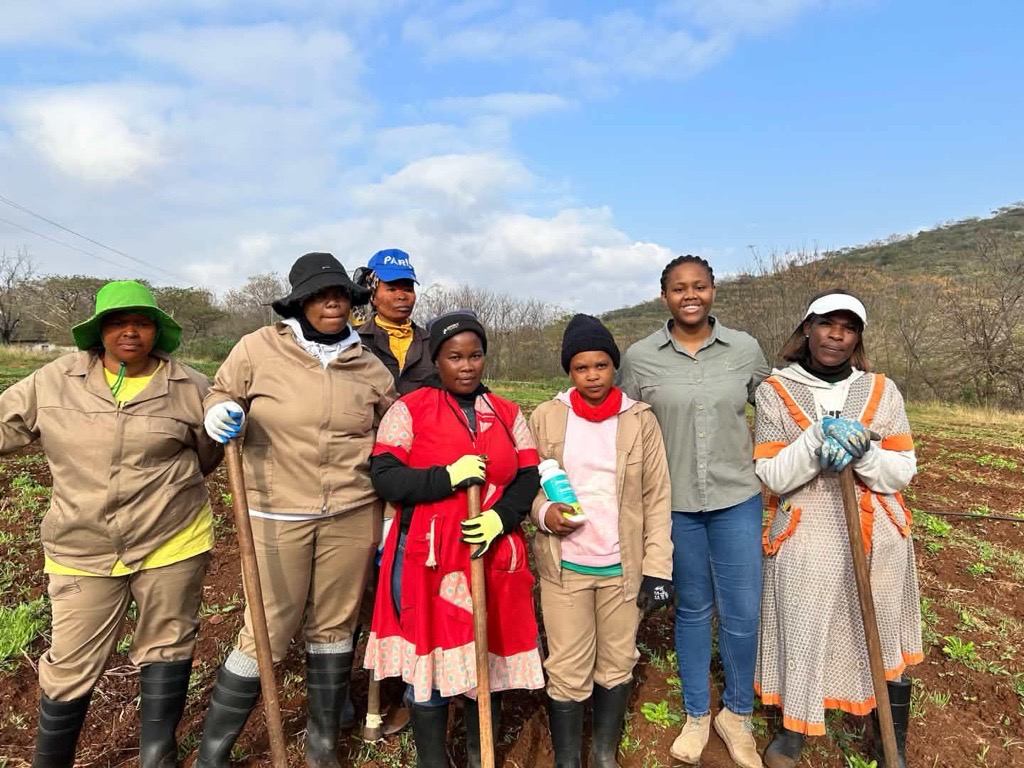
In 2026, women farmers in Mpumalanga have been making strides from small-scale production towards supplying retailers, school feeding schemes and local businesses. Programmes providing women with training, financial literacy, technology and market access have helped farmers such as Skhulile Phelitia Malibe and Kolile Malibe build increasingly commercial operations.
These women represent different backgrounds, different commodities and different agricultural journeys. What connects them is the decision to participate, build and lead.
There is still work to be done
Celebrating progress should not mean pretending that the challenges have disappeared.
Women in agriculture continue to face obstacles, particularly around access to land, finance, markets, training and technology. These barriers can make it more difficult for women to move from participating in agriculture to owning and controlling agricultural enterprises.
The question now is not simply how we can encourage more women to enter agriculture. It is how we create an agricultural sector where women can thrive.
That means creating opportunities for women to access land and finance. It means ensuring that women have access to agricultural knowledge, technology and mentorship. It means opening leadership opportunities and making sure that women are represented in the conversations where decisions about the future of agriculture are being made.
It also means changing the way we speak about agricultural careers.
A young woman interested in agriculture should know that her career does not have to end with farming a field.
There is an entire value chain waiting for her.
The future is female — and agricultural
The future of agriculture will require more than increased production.
It will require innovation, resilience, sustainability and new ideas. It will require people who understand the realities of farming while being willing to challenge the way things have always been done.
Women have a role in that future. In fact, they already have one.
The United Nations has declared 2026 the International Year of the Woman Farmer, with the theme “Empowered women transforming agricultural food systems.” The recognition is an opportunity to draw attention to the essential role women play while also addressing the structural barriers that continue to limit their participation and success.
So, during Women’s Month, perhaps we should look beyond simply celebrating the women we can see.
We should also recognise the women whose work has often happened quietly — the women who have planted seeds, raised livestock, worked long days in fields, managed farms, supported agricultural businesses, conducted research, trained farmers and fed communities.
And we should celebrate the women who are now taking those foundations and building something bigger.
Women belong in agriculture.
They belong in the field.
They belong in the laboratory.
They belong behind the tractor, behind the desk, in the boardroom and at the decision-making table.
They belong wherever the future of agriculture is being shaped. Because agriculture has always depended on women.
Now, it is time to make sure the sector fully recognises just how much women have to offer.