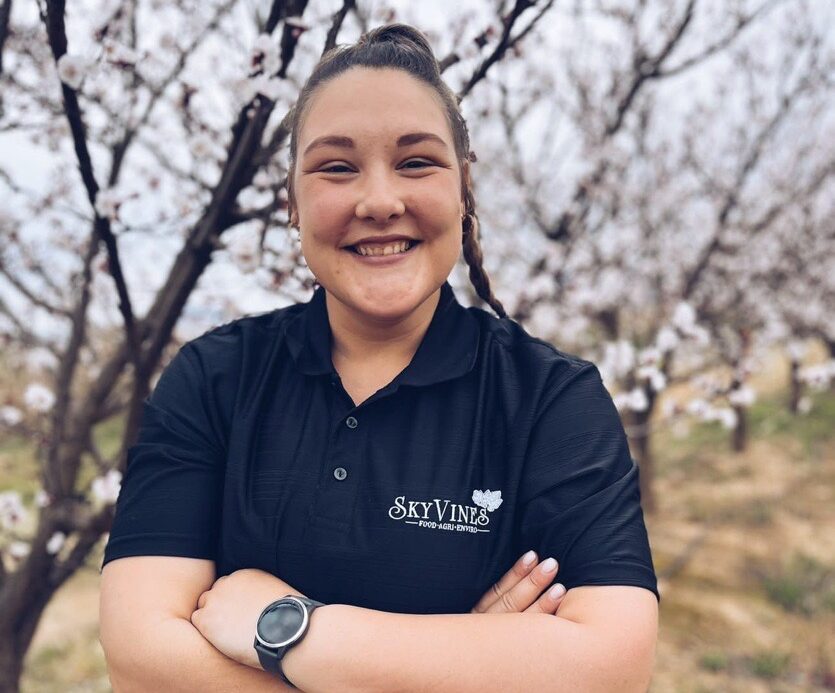
Marcel Pettit was planning a career in sport nutrition. Nine years later she is an agricultural and ethical compliance consultant at Skyvines in Cape Town, advising agricultural businesses on standards, audits, training and compliance. It was a route that ran through a table grape farm, a family connection and a great deal of learning on the job.
Throughout Women’s Month we have shared stories of the many ways women are contributing to agriculture and shaping its future: on farms, and through science, technology, business and leadership. There is no single path in. We close the series with Marcel’s: a story of finding purpose, building confidence and learning to make space for others along the way.
An Unexpected Road into Agriculture
A career in agriculture was never part of the original plan. At school Marcel imagined herself in sport nutrition, and after matriculating from Technical High School Drostdy in Worcester she spent nine months working as an au pair before coming home to a string of temporary jobs.
Her entry into the industry came almost by accident. She was working a temporary administrative post at Ford when a family connection produced the offer of a permanent job on a farm. She took it, and that decision became the beginning of the career she is still building today.
Nearly five years followed on a table grape farm in De Doorns, where she worked as a wages clerk and compliance representative and absorbed the dozen other responsibilities that farm life hands out. Those years became her foundation.
“I learned in practice. I saw what farmers do. Yes, I can learn in the book what they do, but the best way is to do and see it yourself.”
From the Farm to Consulting
The farm also clarified what she wanted next. She was drawn to supporting agricultural businesses rather than standing outside them, identifying problems without any part in solving them. While working, she began studying Human Resources Management, which introduced her to legislation and standards and, in time, shaped the direction of her career.
Her work now centres on agricultural and ethical compliance, helping farmers and businesses meet the requirements that open certain markets to them. It runs on standards, audits, training and paperwork. But compliance, for Marcel, has never been about the certificate at the end of it. Behind every policy, procedure and audit finding, she says, are people whose working conditions, rights and wellbeing are at stake.
So rather than treat compliance as a box-ticking exercise, she wants businesses to understand why the requirements exist and how implementing them properly can produce lasting change. It is also the part of the job she likes most:
“Helping others and making a big task seem small and doable.”
A Career That Doesn’t Always Go According to Plan
Consulting has taught Marcel that even good plans change. A typical day might mean answering clients and email, driving between farms, running site inspections, preparing clients for audits and several hours on site; she can cover anywhere from 30 to 180 kilometres and see two clients before the day is out. Then there are the things no diary accounts for: unannounced audits, cancelled appointments, weather. Some audits run for days, with Marcel working closely alongside both client and auditor throughout.
The harder lesson has been not to take every setback personally. Clients have resisted working with her; some have expected her to shoulder responsibility for problems that ended up as audit findings. Over time she learned to separate a difficult day from her sense of who she is.
“It’s a bad day, not a bad life. It is one page in the chapter, not the whole chapter.”
Being Young and Being a Woman in Agriculture
The path has not been without barriers. The one Marcel names most readily is entering the industry young and female, in a sector where traditional assumptions about women’s roles still shape how they are received. She has had to ask farmers with decades of experience to trust her knowledge and her recommendations, and to prove herself in an environment where women were not always expected to hold this kind of professional role.
Those experiences made her more persistent, more evidence-based, more adaptable and more professional. They also hardened her conviction that women need to back one another, and that creating room for women and young professionals to find their voices and grow in agriculture is part of the work she wants to do.
Learning to Believe in Herself
Asked about the biggest mistake of her career, Marcel does not reach for a technical error or a missed deadline. She names something more personal: not believing in herself. Confidence matters, she has learned, particularly as a woman in a male-dominated field, and so does accepting that she cannot fix everything or keep everyone happy.
That growth is the more striking given how she began. Nine months passed in preparation, shadowing senior consultants, before she was handed a single client of her own, and she remembers questioning whether she was good enough and wondering why the work had not come. Her seniors encouraged her to treat it as a learning season. Eventually her first three clients arrived; today she holds 20 on retainer.
Progress, in other words, rarely arrives on the schedule we expect. Sometimes the preparation is well under way long before the opportunity becomes visible.
The Kind of Leader She Wants to Be
Marcel has little interest in leading from above. She would rather lead by example: approachable, working alongside people, building an environment in which they feel comfortable contributing. She is one of 13 consultants split across agriculture, environmental and food safety, and she credits the people around her for much of her growth.
Leadership, in her view, is not really about technical knowledge or being the person who decides. It is about listening, understanding where people are strong, supporting them through the difficult parts and earning respect through consistency and trust. She is still working out what it means to her, but she knows the environment she wants to create.
Making the Industry Easier for Those Coming After Her
Mentorship is one of Marcel’s strongest themes. Newcomers, particularly young women entering agriculture and ethical auditing, need more than formal training, she argues. They need practical exposure: the chance to shadow experienced consultants and auditors, sit in on real audits and learn how to handle difficult conversations with both management and workers.
Confidence, professional communication and a working grasp of the standards should be treated as part of professional development, she believes. Most of all, young professionals need access to people who have already done the job.
“Having someone who has already walked the path to guide you, share experiences, and encourage you can make a huge difference.”
Building a Legacy Beyond Compliance
Asked what she wants to leave behind, Marcel’s answer reaches past her own career: a legacy of integrity, knowledge and positive change. She wants the businesses she works with to understand why ethical practice matters, rather than simply preparing for an audit, and she wants to pass what she knows to the next generation of consultants, particularly the young women entering the industry.
Her longer-term goal is a culture in which ethical compliance is part of how agricultural businesses operate every day, not something remembered when an audit is approaching. She may never see the full effect of that work, she says, but hopes the people she trains and supports will carry it further. That, for her, is the real legacy.
An Agriculture Industry That Makes Room for Everyone
Looking ahead, Marcel hopes to see agriculture become more inclusive, more innovative and more sustainable, with greater room for young people and women to lead, contribute ideas and be heard. She also hopes that worker welfare, ethical practice and environmental responsibility come to be
understood as part of good business, rather than as requirements for certification. But while she wants the industry to change, there are things she hopes stay exactly as they are.
Integrity. Fairness. Human connection.
An audit, she says, should never become an exercise in documents and checklists. Behind every policy, procedure and finding are real people whose lives and working conditions are shaped by what gets written down.
“Jump”
Ask Marcel what she would say to someone standing where she stood on her first day, and the answer is a single word:
“Jump.”
You may not know how it will work out. You may fail. You may have to learn as you go. But she would rather take the opportunity, learn from the failure and keep moving than spend years wondering what might have been, and her own career is the evidence. She did not plan to enter agriculture. She did not know where it would take her. She questioned whether she was good enough, met resistance and had to prove herself.
And yet, nine years on, she is building a career around helping agricultural businesses operate more responsibly, while working towards something larger: a path that is easier for the next generation to follow. As Women’s Month closes, her story is a reminder that women in agriculture are not confined to one role, or to one definition of what agricultural work looks like. They are on farms. They are in consulting. They are in compliance, research, management and leadership. And increasingly they are shaping not only what agriculture produces, but how the industry operates, and who gets to be part of its future.
Marcel Pettit is an agricultural and ethical compliance consultant at Skyvines.