
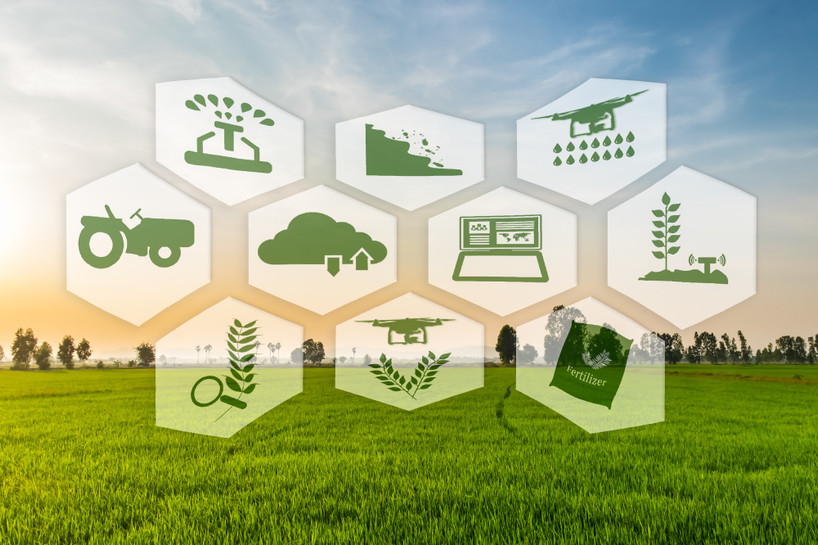
Whenever new technology enters the agricultural space, one fear shows up almost immediately:
“Will this replace farmers?”
It’s a question I hear often…in fields, training sessions, workshops, and even casual conversations. Every new tool, from drones to sensors to satellite data, seems to carry the same concern: that farming is being automated beyond recognition. That machines are taking over. That experience and instinct will become irrelevant.
But I don’t think so….
Technology isn’t taking over farming.
It’s giving farmers more control than ever before.
And in many ways, it is bringing farming back to what it has always been:
a series of informed decisions made by skilled people who understand their land.
Let’s unpack this.
1. Control vs Automation: They Are Not the Same Thing
When people hear “agricultural technology,” they often imagine a future where machines make decisions independently, where tractors drive themselves and drones operate with no human involvement.
The reality is very different.
Automation = machines performing tasks
Control = people making better decisions
Most tools entering agriculture today don’t automate decisions they inform them.
Drones, sensors, soil monitors, weather models, and software do one thing extremely well:
They give farmers clearer visibility.
The farmer still decides:
- What to do
- When to act
- Which tool to use
- How much to apply
- What the farm truly needs
Technology doesn’t remove the farmer…it enhances the farmer.
The seat of decision‑making remains human
2. Data as Empowerment. Not Replacement
One of the biggest shifts in modern farming is the move from observation‑based decisions to data‑supported decisions.
This doesn’t mean farmers stop trusting their instincts.
It means their instincts become stronger.
Because now they have:
- Real‑time field visibility
- Stress detection before symptoms appear
- Soil and moisture insights
- Yield maps
- Localized pest/disease monitoring
- Accurate application records
- Predictive models on timing and risk
Data doesn’t tell farmers what to do.
It tells them what’s happening, so they can respond better.
In the past, farmers were forced to work with incomplete information.
Technology fills the gaps , it doesn’t replace the person.
3. Farmers Still Remain the Decision-Makers
Every technology demonstration I’ve seen, and every field conversation I’ve been part of, leads to one truth:
Farmers use technology as a tool, not a crutch.
They ask:
- “Where does this fit in my system?”
- “What is the ROI?”
- “Does this make my life easier?”
- “What problem does this solve?”
- “Can my staff operate it?”
Farmers don’t hand over control.
They retain it by deciding which tools deserve a place on their land.
Technology companies don’t determine adoption.
Farmers do.
And farmers are smart, strategic, and deeply knowledgeable about their operations. They don’t blindly adopt anything. They filter, evaluate, refine, and adapt tools to their reality.
That’s control.
That’s leadership.
That’s stewardship of the land.
4. Technology Reduces Risk and Gives Farmers Options
One of the biggest advantages of modern tools is risk reduction.
Not automation ..options.
Drones help act quickly when tractors can’t enter fields.
Data helps allocate inputs where they are actually needed.
Early detection helps prevent escalation.
Weather models help plan ahead.
Sensors warn before stress becomes visible.
Precision tools help stretch input budgets further.
These tools don’t remove the farmer’s role.
They protect the farmer’s season.
Technology doesn’t say, “Let me do this for you.”
It says, “Here’s what’s happening. Decide the best move.”
5. True Modern Farming: High Tech, High Human
There is a misconception that modern farming means farmers are being replaced by robots, apps, and machinery.
In truth, modern farming is becoming:
- More intuitive
- More informed
- More efficient
- More sustainable
- More resilient
- More profitable
And at the centre of it all is still the farmer.
Technology expands their capability.
It does not take away their authority.
Farmers remain:
- the decision‑makers
- the strategists
- the problem‑solvers
- the stewards of the land
- the knowledge carriers
- the leaders of their operations
Modern agriculture is not about removing the human element it’s about enhancing it.
Final Thought: Technology Doesn’t Replace Farmers, It Elevates Them
Farming has always required wisdom, experience, and intuition.
Those are timeless skills.
Technology simply gives those skills:
- better visibility
- better timing
- better accuracy
- better efficiency
The fear that “technology is taking over farming” fades the moment you see how farmers actually use it. They don’t surrender control ,they gain it.
The future of farming isn’t autonomous.
It’s empowered.
And as we end the February theme, one thing is clear:
Farmers remain at the centre.
Technology simply strengthens the hands that feed nations.
I really appreciate how the post highlights the difference between automation and control. It’s great to see how technology can empower farmers without replacing their expertise. With the right tools, they’re able to make more informed, strategic decisions rather than just being replaced by machines.