When people talk about the future of agriculture, they often focus on technology, innovation, and sustainability. But the future of farming is also about people, particularly the young men and women who are stepping into an industry where experience is highly valued and credibility must be earned.
For Sigcine, agriculture has never been just a career choice. It has been part of her life for as long as she can remember.
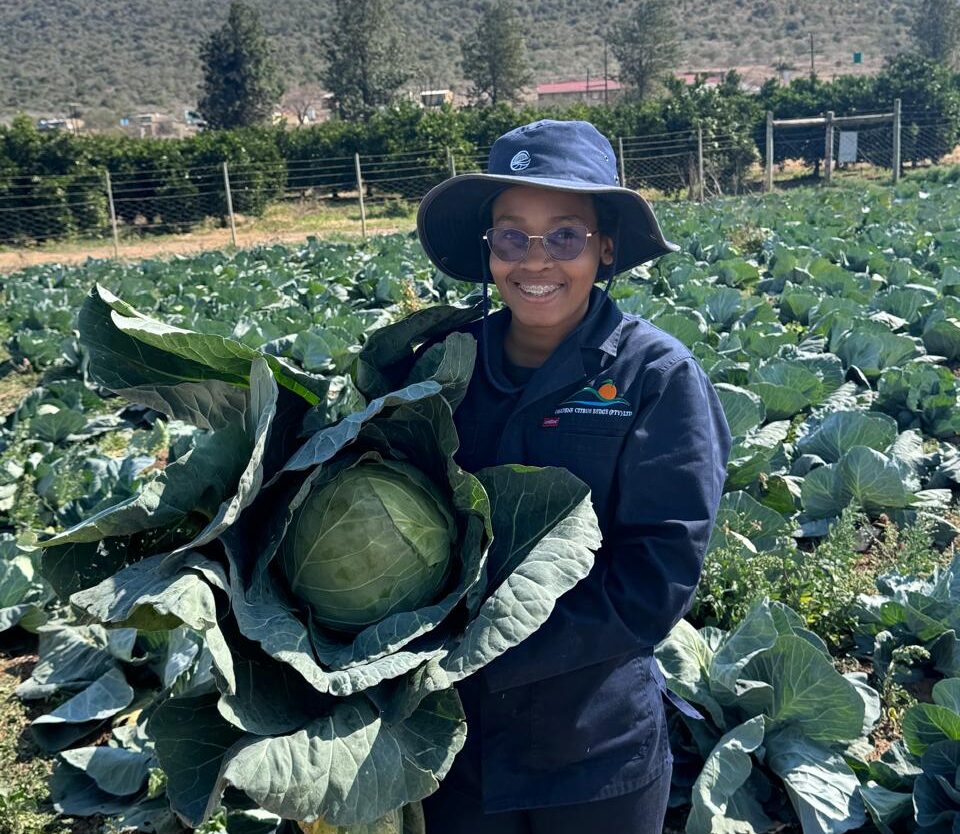
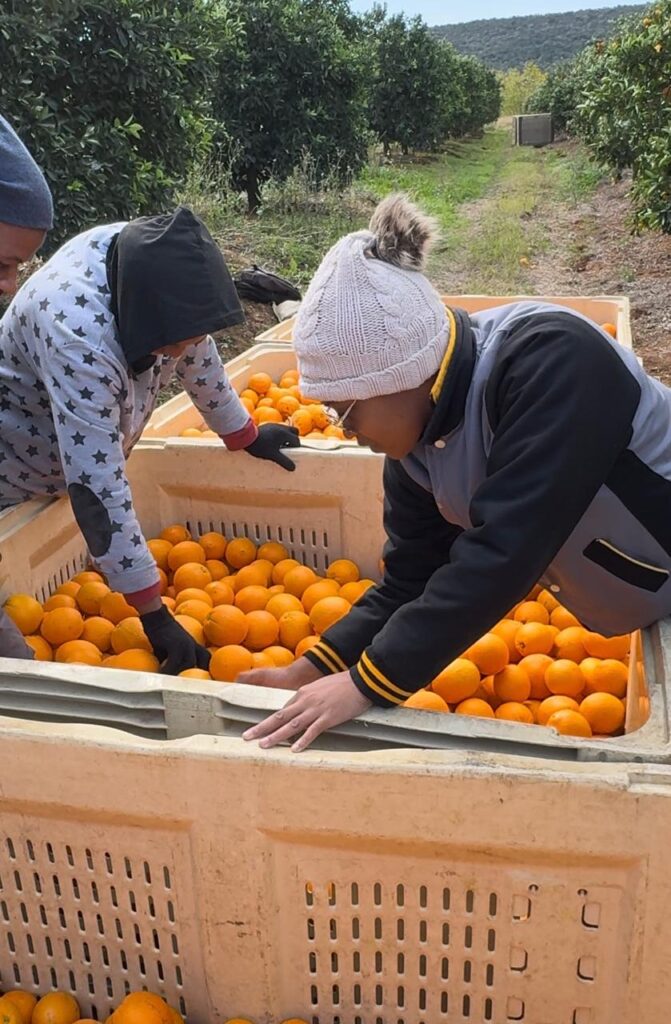
Growing up on her family’s citrus farm, she experienced farming not as a business, but as home. The farm was established for orange production and formed the backdrop of her childhood. Only later did she begin to appreciate its true significance.
“Growing up on the farm was normal,” she says. “But as I got older, I started seeing how many people depend on it.”
Today, Sigcine works as an Assistant Manager on the farm. Her journey started in 2021 when she was responsible for processing payments for workers. Over time, her responsibilities expanded to payroll administration, farm records management, and ensuring compliance with standards such as GlobalG.A.P audits.
As she became more involved in the business, she began to understand that the farm represented much more than production figures and profit margins.
“I’ve seen where the farm came from and where it is today,” she explains. “If something happened to the farm, people would lose their jobs, and many families would suffer.”
That realization created a deep sense of responsibility, not only to the farm, but to the people whose livelihoods depend on it.
Learning to Speak for the Farm
One of the defining moments in Sigcine’s journey came when she was invited to Cape Town to speak as a youth inspiration speaker.
Standing in front of approximately 250 local and international guests was both exciting and overwhelming.
“It was shocking and exciting at the same time,” she recalls.
For many young people, public speaking is intimidating. For Sigcine, the pressure felt even greater because she was speaking about agriculture in front of people who knew the industry well.
“I worried that I would say something that didn’t make sense,” she says.
She also questioned whether her family’s farm was significant enough to be discussed among larger operations in the industry.
The invitation was an important reminder that every agricultural story matters, regardless of the size of the operation.
Carrying the Weight of Responsibility
While public speaking was challenging, Sigcine admits that her biggest fear comes from the responsibilities she carries every day on the farm.
Agriculture is an industry where small mistakes can have major consequences.
From spray programmes to fertilizer schedules and application measurements, many decisions directly affect crop performance.
“My biggest fear is doing something that I think is right, only to discover that it was wrong,” she says.
A single mistake can impact an entire season.
“It’s not about the people. It’s about ruining a whole crop. You can damage an entire season.”
Even today, the responsibility of making those decisions still scares her.
Yet it is this awareness of what is at stake that motivates her to continuously learn and improve.
Being the Youngest in the Room
Perhaps one of the most challenging aspects of Sigcine’s journey has been navigating spaces where she is often one of the youngest people present.
In many agricultural circles, age is associated with experience and authority. Walking into meetings, workshops, and conferences can sometimes feel like entering a space where people have already made assumptions about you.
“People often see you as young and assume you know nothing,” she explains.
While she is quick to admit she does not know everything, she believes many young professionals face the challenge of being underestimated before they have had an opportunity to contribute.
Sometimes she is viewed as an inspiration.
Other times, she is viewed as “just a child.”
In an industry traditionally dominated by older men, earning a voice can require patience and persistence.
“There are times when you have to keep trying before you’re given a chance to speak,” she says.
“And when you finally get that opportunity, you have to make sure what you say makes sense.”
For young women especially, the pressure can feel even greater.
“You feel like you don’t have room to make mistakes.”
Creating Her Own Identity
Being underestimated because of her age and gender played a significant role in one of the biggest decisions she made.
Although she already had a qualification in logistics and practical farming exposure through the family business, she chose to return to university and study agriculture.
Many people questioned her decision.
Some believed she could simply learn on the farm while building on her logistics qualification.
But her reason was simple.
“I wanted to speak from a place of expertise.”
She wanted the knowledge and credentials to support her voice and strengthen her confidence.
“I wanted a qualification to back me up.”
For Sigcine, education became a way of investing in herself rather than relying solely on her family background.
Confidence as a Superpower
When asked how she handles situations where her experience or authority is questioned, Sigcine’s answer is straightforward.
She focuses on what she knows and the quality of her work.
“The way I do things speaks for itself.”
She understands that being questioned and underestimated is part of working in the industry.
“It’s inevitable.”
Instead of allowing those experiences to discourage her, she chooses to focus on continuous learning and self-confidence.
“Confidence in yourself and in your knowledge is a superpower.”
At the same time, she believes humility remains important.
“You can never know everything.”
Building Her Own Legacy
Many people assume that working on a family farm automatically comes with pressure to live up to previous generations.
Surprisingly, Sigcine doesn’t see it that way.
In fact, one of the reasons she pursued an agricultural degree was to create her own identity within the industry.
“I didn’t want people to think I was doing this because my dad wanted me to.”
When introducing herself, she prefers to lead with her own achievements.
“I introduce myself as Sigcine. I talk about what I studied and where I work.”
She rarely mentions that the farm belongs to her father.
Not because she is ashamed of it, but because she wants her contributions to stand on their own.
She wants to be recognized for who she is, not only for where she comes from.
Looking Ahead
Sigcine’s story is one shared by many young people entering agriculture.
It is a story of learning, doubt, responsibility, and growth.
It is about finding the courage to contribute even when you feel inexperienced, pursuing knowledge when people underestimate you, and building your own identity while honoring the opportunities that came before you.
Most importantly, it is a reminder that age does not determine potential.
Sometimes the youngest person in the room is quietly preparing to become one of its strongest voices.