Most farms believe they are regenerative.
They’re not.
And that’s not an attack on farmers. It’s a reflection of the system we’ve been trained in. A system that rewards production, efficiency, and quick results, but rarely asks what is happening beneath the soil.
Because here’s the uncomfortable truth:
We are producing more… but often building less.
Agriculture is powerful. It feeds nations, drives economies, and connects us to the land in a way no other industry does. But if the soil that supports all of this is slowly losing its function, then productivity alone is not enough.
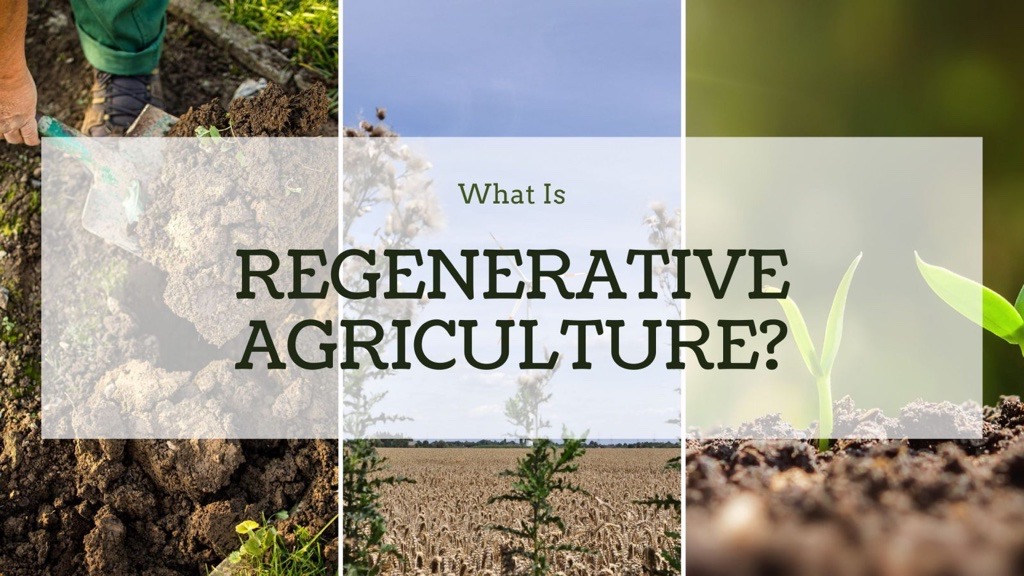
That’s where regenerative agriculture comes in. Not as a trend. Not as a rejection of modern farming. But as a shift in how we think.
Sustainable agriculture asks: How do we maintain this? Regenerative agriculture asks: How do we make this better?
So why aren’t more farms fully regenerative?
Because most systems are built around outputs, not ecosystems.
We are taught how to grow crops. We are not always taught how to build soil.
We learn what to apply, when to apply it, and how to correct deficiencies quickly. And yes, those tools work. Synthetic fertilizers, crop protection products, and modern inputs are effective.
But when they become the foundation instead of a support system, something shifts.
Think of it like this. Coffee gives you energy. It helps you perform. But if you rely on it without rest, nutrition, or balance, it eventually stops working the way it should.
That’s what happens when soil is fed inputs, but not supported as a living system.
Regenerative agriculture doesn’t say “remove inputs.” It says: build a system where inputs are not doing all the work.
And that system is built on five connected principles.
1. Minimize Soil Disturbance
Soil is not just a medium. It’s a living system.
Excessive tillage breaks down structure, disrupts microbial life, and reduces the soil’s natural ability to function. Many farms still rely on it because it delivers quick, visible results. But over time, the cost is hidden.
We reduce disturbance… but often replace it with other forms of stress. So the real question is: are we protecting the soil, or just changing how we disturb it?
2. Keep the Soil Covered
Bare soil is exposed soil. It loses moisture, organic matter, and resilience. Yet clean fields are still seen as a sign of good management.
We clear residues. We leave fields bare between seasons. And then we wonder why the soil struggles to hold water, support life, and maintain structure.
Cover is not untidiness. It is protection.
3. Maintain Living Roots
Living roots keep soil alive. They feed microbial communities, improve aggregation, and maintain biological activity. Without them, the soil becomes inactive.
Many systems still include long fallow periods where nothing is growing. No roots. No activity. No regeneration.
We plant for production, but not always for continuity.
4. Promote Biodiversity
Nature thrives on diversity. Agriculture often simplifies it.
Monoculture systems are efficient, but they are also fragile. They rely heavily on intervention because there is little natural balance.
We rotate crops, but rotation alone is not diversity. True resilience comes from integrating multiple species, supporting different biological functions, and allowing systems to balance themselves.
5. Integrate Livestock
Livestock are not separate from cropping systems. They are part of the cycle. They recycle nutrients, stimulate plant growth, and contribute organic matter back into the soil. But in many modern systems, crops and livestock are completely disconnected.
So nutrients are exported, not returned. Cycles are broken, not completed.
So where do most farms fall short?
Not in effort. Not in intention. But in integration. We apply one principle, maybe two:
- Reduced tillage, but bare soil
- Crop rotation, but limited diversity
- Fertilizer programs, but little biological support And we call it regenerative.
But regenerative agriculture is not built on isolated practices. It’s built on systems.
Where do fertilizers, biostimulants, and soil conditioners fit in?
This is where the conversation often gets misunderstood.
Synthetic fertilizers are not the problem. They are tools. They provide nutrients efficiently and play an important role in production. But they were never meant to carry the entire system.
When combined with organic matter inputs, biostimulants that enhance microbial activity, and practices that build soil structure and life, they become more effective, not less.
The goal is not to remove inputs. The goal is to reduce dependency.
Final Thought
Maybe the question isn’t: “Am I regenerative?”
Maybe it’s: “Am I building a system, or maintaining a cycle of dependency?”
Because the future of agriculture won’t be decided by how much we can produce in one season. It will be decided by whether our soils can continue producing without needing more, and more, and more to survive.
And that shift doesn’t start with doing everything. It starts with seeing the system as a whole.